Treacle Tart
Crisp shortcrust filled with golden syrup, breadcrumbs and lemon: sticky, sharp and very British.
AI assistance: the introduction, ingredient list, method, tips and FAQ on this page were drafted with an AI writing tool, working from long-established traditional methods. Named editor who reviewed it: owner to supply How we work
- Prep
- 45 min
- Cook
- 55 min
- Total
- 1 hr 40 min
- Makes
- 8 servings
- Difficulty
- Medium
- Course
- Pudding
- Cuisine
- English

Despite the name, a classic treacle tart is made with golden syrup, not black treacle. The syrup is thickened with fresh white breadcrumbs and sharpened with lemon, so it sets to a soft, chewy filling rather than running out of the case.
Golden syrup was first sold in the 1880s, and the tart soon became a school-dinner and Sunday-pudding favourite.
Ingredients
Cups use the King Arthur Baking ingredient weight chart. Weighing is more accurate.
Pastry
- 175 g plain flour (US: all-purpose flour)
- 100 g cold unsalted butter, cubed
- 25 g icing sugar (US: powdered sugar)
- 1 egg yolk
- 1 tbsp cold water, plus a little more if needed
Filling
- 400 g golden syrup
- 120 g fresh white breadcrumbs, from about 4 slices of day-old bread
- 1 lemon, finely grated zest and 2 tbsp juice
- 1 egg, beaten
- ½ tsp ground ginger, optional
Equipment
Shop links are affiliate links (disclosure).
- 23 cm loose-based tart tinHow to chooseShop on Amazon(affiliate link, opens in a new tab)
- Rolling pinHow to chooseShop on Amazon(affiliate link, opens in a new tab)
- Small saucepanHow to chooseShop on Amazon(affiliate link, opens in a new tab)
- Digital kitchen scalesHow to chooseShop on Amazon(affiliate link, opens in a new tab)
Method
- 1
Rub the butter into the flour and icing sugar until it looks like breadcrumbs. Add the yolk and water and bring together into a dough. Wrap and chill for 30 minutes.
- 2
Heat the oven to 200°C / 180°C fan / gas 6 / 400°F. Roll the pastry out and line a 23 cm loose-based tart tin. Prick the base, line with baking paper and baking beans, and bake for 15 minutes. Remove the paper and beans and bake for 5 minutes more until dry. Lower the oven to 180°C / 160°C fan / gas 4 / 350°F.
- 3
Warm the golden syrup in a saucepan over a low heat until runny, but not hot. Take off the heat and stir in the breadcrumbs, lemon zest and juice, ginger and beaten egg.
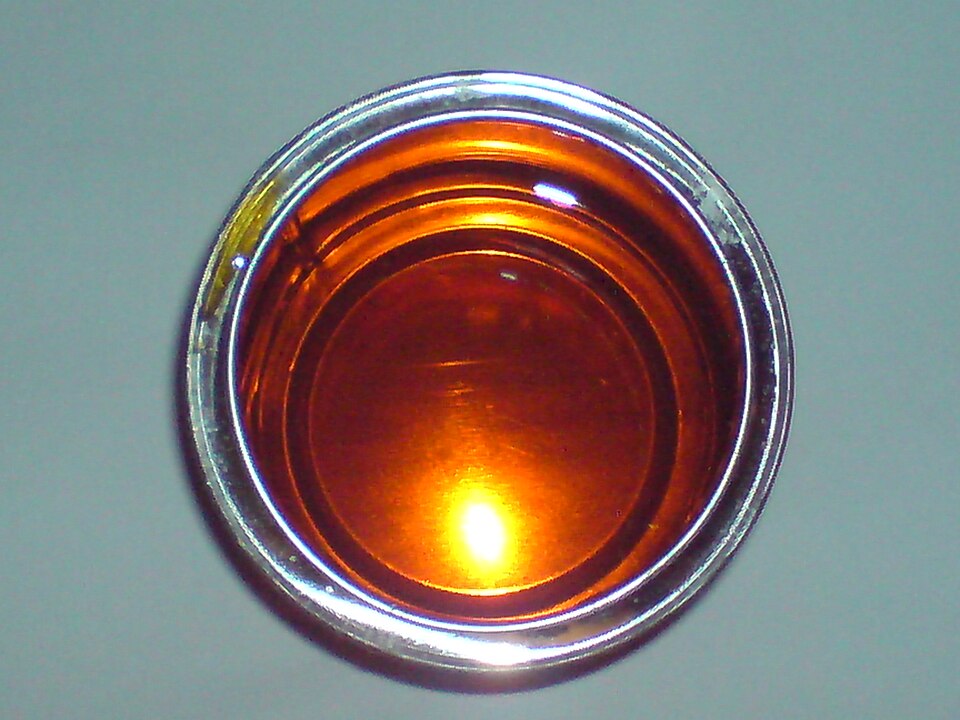
Photo: Londonsista via Wikimedia Commons, CC BY-SA 3.0, cropped - 4
Pour the filling into the pastry case and bake for 30–35 minutes, until golden and just set with a slight wobble in the middle. Leave to cool for at least 20 minutes before cutting.
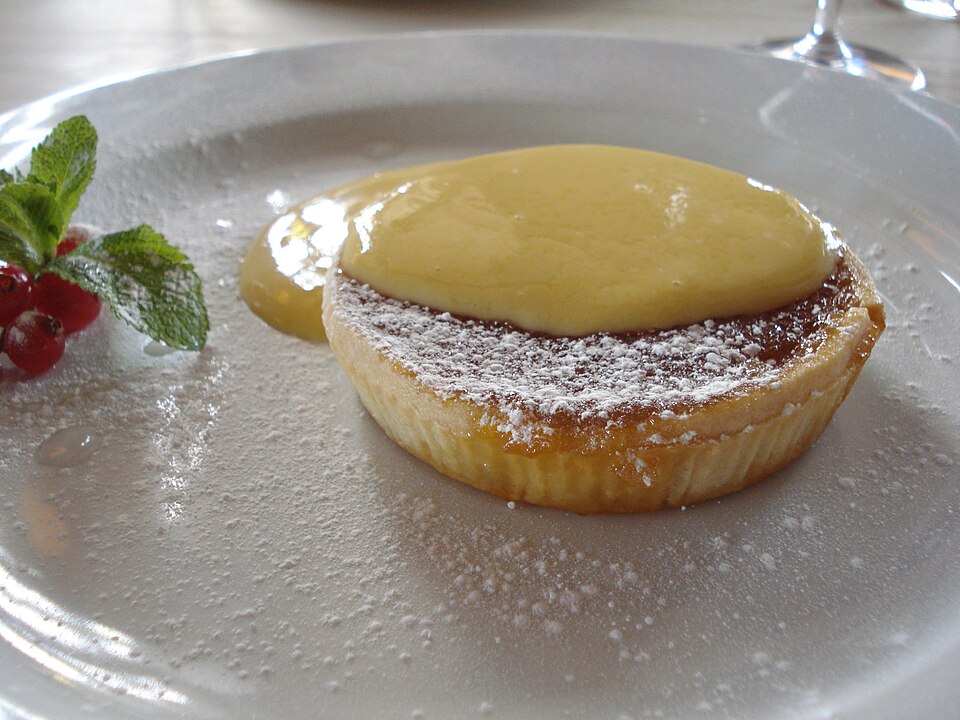
Photo: Peter Smith via Wikimedia Commons, CC BY 2.0, cropped


Tips
Serve warm with custard, clotted cream or vanilla ice cream. It also keeps well for 2–3 days in a tin.
Weigh the syrup straight into the pan on digital scales: it is far less messy than spoons. A lightly oiled spoon helps scrape out the last of it.
The pastry is the same as for our Bakewell tart.
Using a different tin? Change "Your tin" and the ingredient quantities above update automatically.
Convert tin sizes
Multiply every ingredient by
1.00
Enter tin sizes between 5 and 60 cm.
If it goes wrong
| Problem | Likely cause | Fix |
|---|---|---|
| Filling runny after cooling | Not enough breadcrumbs or underbaked | Use the full weight of crumbs and bake until only the centre wobbles |
| Filling hard and chewy | Overbaked, or syrup boiled | Only warm the syrup; take the tart out while the centre still wobbles |
| Soggy base | Case not baked blind long enough | Bake until the base looks dry and sandy before filling |
Guides for this recipe
Some of these guides contain shop links, which are affiliate links (disclosure).

Buying guide
Food Processors and Mini Choppers

Buying guide
Lemon Squeezers and Citrus Juicers

Buying guide
Baking Beans: Blind Baking Without a Soggy Bottom

Buying guide
Tart Tins: Loose-Bottomed, Fluted and Mini

Buying guide
How to Choose Sandwich Tins for Victoria Sponge

How-to
Essential Equipment for British Baking

Buying guide
Rolling Pins: Which Type Is Best for Pastry?

Buying guide
Kitchen Scales for Baking: What to Look For

Kitchen design
Copper Pans in the Kitchen: Cooking, Display and Care

Buying guide
Saucepans: Stainless, Non-Stick or Copper?

Buying guide
Baking Trays and Bun Tins: What You Need

Buying guide
Springform and Deep Cake Tins: A Guide

Kitchen design
How Much Food for Christmas Dinner? Quantities Per Person

Kitchen design
How Many Calories Are in an Afternoon Tea?
More British Baking recipes

Recipe · 1 hr 40 min
Bakewell Tart
Crisp shortcrust, a layer of raspberry jam and a soft almond sponge topped with flaked almonds.

Recipe · 50 min
Irish Soda Bread
A yeast-free loaf raised with bicarbonate of soda and buttermilk: mixed, shaped and baked in under an hour.

Recipe · 1 hr 30 min
Lemon Drizzle Cake
A soft lemon loaf soaked with a crunchy sugar-and-lemon drizzle while still warm.
Card photos: A white food processor with a clear bowl and feed tube, Donovan Govan via Wikimedia Commons, CC BY-SA 3.0, cropped; A wooden lemon reamer, Poupou l'quourouce via Wikimedia Commons, CC BY 2.5, cropped; A heap of white ceramic baking beans, Scott Robinson via Wikimedia Commons, CC BY 2.0, cropped; Pecan tarts in fluted tart tins on a baking sheet, Whitney via Wikimedia Commons, CC BY 2.0, cropped; A round, deep cake tin, Douglas P Perkins via Wikimedia Commons, CC BY 3.0, cropped; Small cakes cooling on a wire rack, James Petts from London, England via Wikimedia Commons, CC BY-SA 2.0, cropped; A wooden rolling pin with handles, Peter Kammer via Wikimedia Commons, CC BY-SA 3.0, cropped; A traditional mechanical kitchen scale, Berthold Werner via Wikimedia Commons, CC BY-SA 3.0, cropped; Copper pans and a kettle on an old kitchen range, Silar via Wikimedia Commons, CC BY-SA 4.0, cropped; A small stainless steel saucepan with a lid, Cooks & Kitchens from Darlington, UK via Wikimedia Commons, CC BY 2.0, cropped; Mince pies baked in a bun tray, Jeremy Keith via Wikimedia Commons, CC BY 2.0, cropped; A strawberry pie in a springform tin, W.carter via Wikimedia Commons, CC BY 4.0, cropped; A long table laid for Christmas dinner with crackers, glasses and starters, Ruth Hartnup from Vancouver, Canada via Wikimedia Commons, CC BY 2.0, cropped; A three-tiered afternoon tea stand with sandwiches, a croissant, pastries and fruit, Funknendai via Wikimedia Commons, CC0; A Bakewell tart with a slice cut, showing the jam and almond filling, Brynn via Wikimedia Commons, CC BY-SA 3.0, cropped; A round loaf of brown soda bread cooling on a wire rack, michael clarke stuff via Wikimedia Commons, CC BY-SA 2.0, cropped; A slice of lemon drizzle cake served with a cup of tea, Acabashi via Wikimedia Commons, CC BY-SA 4.0, cropped. All credits: image credits.