Buying guide
Oven Gloves: Double, Mitts or Gauntlets?
The British double oven glove versus single mitts and heat-resistant gloves: which is safest for which job.
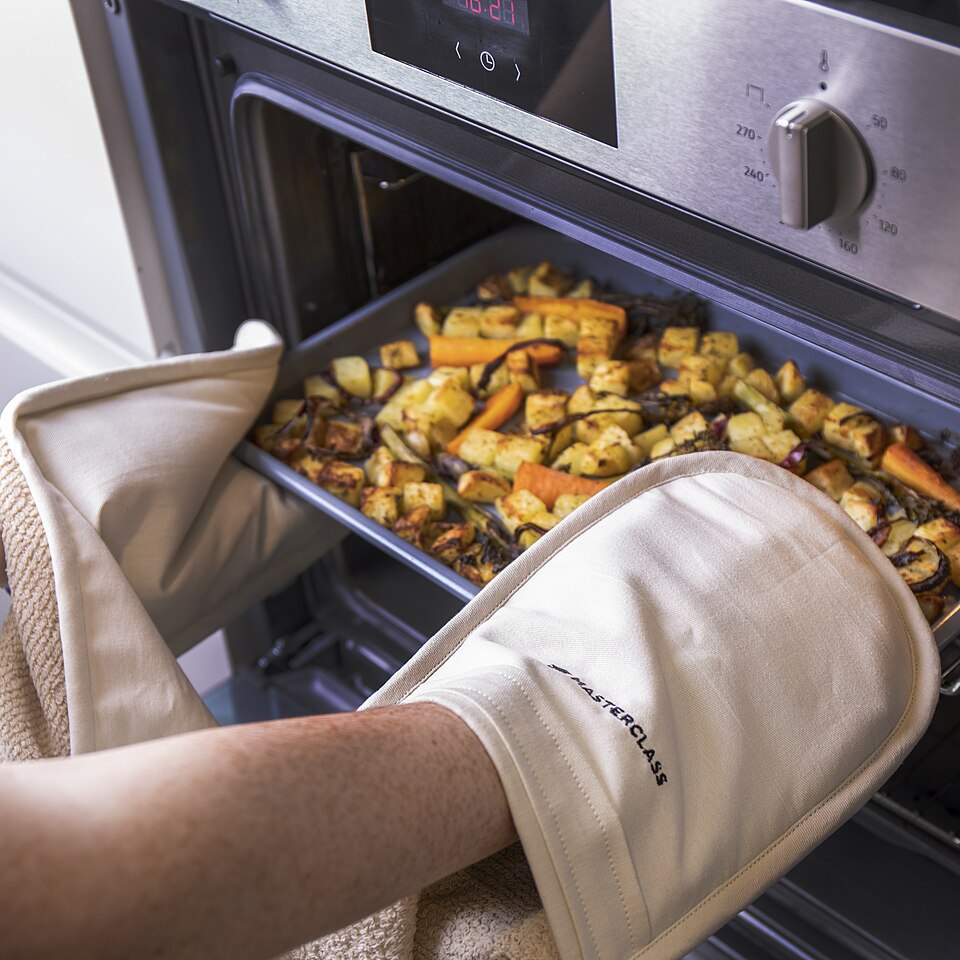
Oven gloves are the kitchen tool most often used past their best. Thin, worn or damp gloves let heat straight through, and that is how most minor kitchen burns happen.
Our shortlist
Shortlist in progress
We only list products once their specifications have been checked against the manufacturer or retailer. Until then, use the criteria above to compare what's available.
Where to buy
Browse current options and prices at the retailer. These are affiliate links: we may earn a commission, at no cost to you (disclosure).
Types
| Type | Pros | Cons |
|---|---|---|
| Double oven glove (two pockets joined) | Classic British style; hangs on the oven rail | Less grip; the middle can dangle near a hot element |
| Single mitts | Better grip; each hand separate | Easy to lose one |
| Gauntlets | Protect wrists and forearms, useful for deep ovens | Bulkier |
| Silicone mitts | Waterproof, wipe-clean | Can be slippery; stiffer |
What to check
- Stated heat resistance from the maker, and how long it lasts in contact.
- Thick padding across the palm and thumb.
- Length: cuffs that reach past the wrist protect against oven racks.
- Machine-washable cotton, or wipe-clean silicone.
Safety
Never use damp or wet gloves: water conducts heat and turns to steam. Replace gloves once the padding thins or scorches. You will need them for hot fat and tins when making roast potatoes and Yorkshire puddings.
How we choose
BeneRecipes compares tools using manufacturer specifications and retailer listings. We have not tested these products ourselves and don't publish star ratings. We explain which type suits which cook and why.
Some links are affiliate links: if you buy through them we may earn a commission, at no extra cost to you. See our affiliate disclosure.