Kitchen design
Inglenooks and Chimney Breasts: Using an Old Fireplace in the Kitchen
How old houses put a range cooker, stove or shelves into the kitchen fireplace, and what to check before you do.

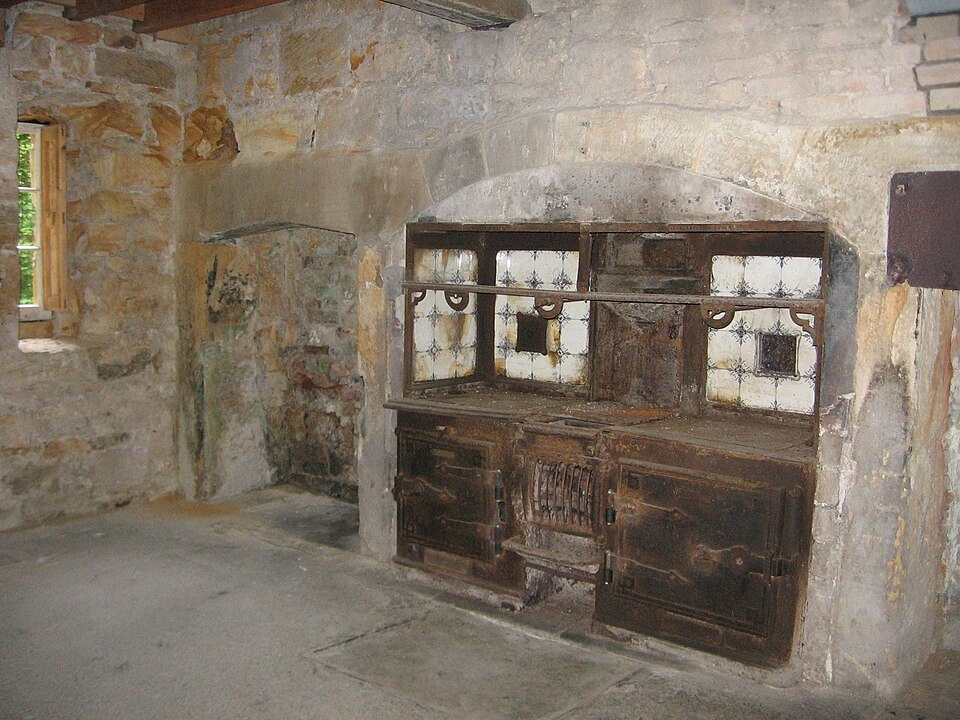
Many old British kitchens were built around a big fireplace, sometimes an inglenook wide enough to sit inside. In Victorian houses it held the cast-iron range. Today the same opening can frame a range cooker, a wood-burner or simply shelves.
Where to buy
Browse current options and prices at the retailer. These are affiliate links: we may earn a commission, at no cost to you (disclosure).
What can go in the opening
| Use | Needs |
|---|---|
| Electric or induction range cooker | No flue; an extractor above; a heat-resistant surround |
| Gas range cooker | Fitting by a Gas Safe registered engineer; an extractor |
| Wood-burning or multi-fuel stove | A lined flue, a proper hearth and a HETAS-registered installer (Building Regulations Part J) |
| Shelving or storage | The flue capped and ventilated to prevent damp |
Before you start
- Check the lintel (the beam or stone above the opening). Old timber lintels can be charred or cracked.
- Measure carefully: range cookers come in standard widths (often 90, 100 or 110 cm); allow the gap the manufacturer specifies either side.
- Extraction: a hood inside the opening may need ducting through the chimney or an outside wall; a builder or installer can advise.
- Listed building? Changes to a historic fireplace may need listed building consent. Check with your local council first.
Finishing the opening
Lime plaster, brick or tiles behind the cooker are practical: see traditional kitchen tiles and splashback ideas. For choosing the cooker, read our range cooker kitchen guide.
BeneRecipes may earn a commission from retailer links on this page, at no extra cost to you. Product suggestions are based on published specifications, not hands-on testing. How we work.
Frequently asked questions
Do I need a professional to fit a gas range cooker?
Yes. Anyone working on gas appliances in a home must be a Gas Safe registered engineer.
Do I need Building Regulations approval for a wood-burner in the fireplace?
Yes. Installing a solid-fuel stove or relining a flue is notifiable work. A HETAS-registered installer can self-certify it; otherwise you apply to local authority Building Control before work starts.
My house is listed. Can I change the fireplace?
Possibly, but you may need listed building consent first: works that affect the character of a listed building need consent. Ask your local council before you start.
Sources
- Domestic gas: frequently asked questions, Health and Safety Executive. Checked 1 October 2026.
- Combustion appliances and fuel storage systems: Approved Document J, GOV.UK, 30 September 2022. Checked 1 October 2026.
- Building Regulations guidance for wood burning stoves, HETAS. Checked 1 October 2026.
- Planning (Listed Buildings and Conservation Areas) Act 1990, section 7, legislation.gov.uk. Checked 1 October 2026.