Buying guide
Preserving Pans for Jam, Marmalade and Chutney
Why jam needs a wide, heavy pan, how big to buy, and which materials suit jam and which suit chutney.
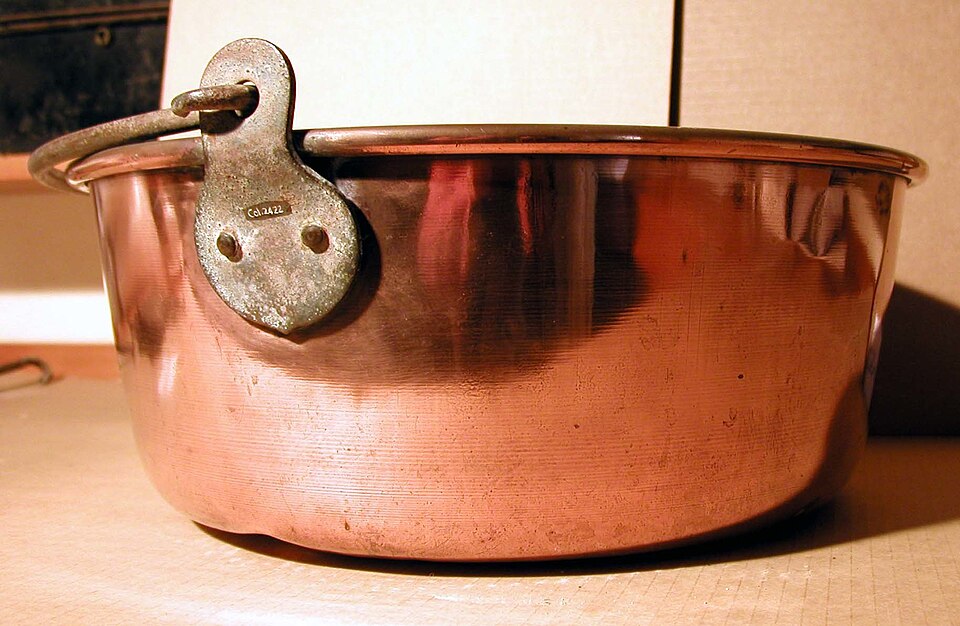
Autumn is jam, jelly and chutney season. A preserving pan (also called a maslin pan) is wide and heavy-based with sloping sides. The wide surface lets water evaporate quickly, so jam reaches its setting point sooner and keeps a fresher flavour.
Our shortlist
Shortlist in progress
We only list products once their specifications have been checked against the manufacturer or retailer. Until then, use the criteria above to compare what's available.
Where to buy
Browse current options and prices at the retailer. These are affiliate links: we may earn a commission, at no cost to you (disclosure).
What to look for
- Width over depth: a wide pan boils off water faster than a deep saucepan.
- A heavy base spreads heat and stops sugar catching.
- Capacity: about 8–9 litres suits most home batches. Jam rises as it boils, so never fill a pan more than half full.
- A handle over the top and a pouring lip make it easier to move and fill jars.
- Pouring and measuring marks inside the pan are handy.
Materials
| Material | Jam | Chutney and pickles | Notes |
|---|---|---|---|
| Stainless steel | Yes | Yes | The all-rounder; often induction-compatible |
| Aluminium | Yes | Avoid | Acid in vinegar can react with the metal |
| Unlined copper | Traditional | No | Vinegar reacts with copper; don't leave fruit standing in it |
| Enamelled | Yes | Yes | Check it is chip-free |
Also useful
- A sugar (jam) thermometer: most jams set at about 104–105°C.
- A jam funnel for filling jars cleanly.
- A long wooden spoon that keeps your hand away from spitting jam.
Frequently asked questions
What temperature does jam set at?
At sea level jam reaches its setting point at about 104.5°C (220°F), roughly 8°F above the boiling point of water. A cold-plate wrinkle test is a good back-up.
How full should a preserving pan be?
No more than half full. Jam rises sharply as it boils and can boil over.
Can I make chutney in an aluminium or copper pan?
It is best not to: vinegar can react with bare aluminium and copper. Use stainless steel or chip-free enamel for chutneys and pickles.
Sources
- Testing jelly without added pectin, National Center for Home Food Preservation (University of Georgia). Checked 2 October 2026.
How we choose
BeneRecipes compares tools using manufacturer specifications and retailer listings. We have not tested these products ourselves and don't publish star ratings. We explain which type suits which cook and why.
Some links are affiliate links: if you buy through them we may earn a commission, at no extra cost to you. See our affiliate disclosure.