Kitchen design
Knife Storage: Blocks, Magnetic Strips and Drawer Inserts
The safest ways to store kitchen knives so they stay sharp and out of harm's way, compared side by side.
Ad: this guide contains affiliate links. If you buy through them we may earn a commission, at no extra cost to you (how we make money).

Loose knives in a drawer get blunt quickly from knocking against each other, and they are a cut waiting to happen when you reach in. Any of the options below is better.
Where to buy
Browse current options and prices at the retailer. These are affiliate links: we may earn a commission, at no cost to you (disclosure).
Options compared
| Storage | Pros | Cons |
|---|---|---|
| Knife block (fitted slots) | Tidy; protects edges | Only fits the set it came with; hard to clean inside |
| Universal block (bristles or rods) | Fits most knives | Bristles need cleaning |
| Magnetic wall strip | Saves worktop space; easy to choose a knife | Knives are on show; place out of children's reach |
| In-drawer block or insert | Hidden and safe | Uses a whole drawer |
| Blade guards | Protects edges in a drawer or picnic bag | Guards can trap moisture |
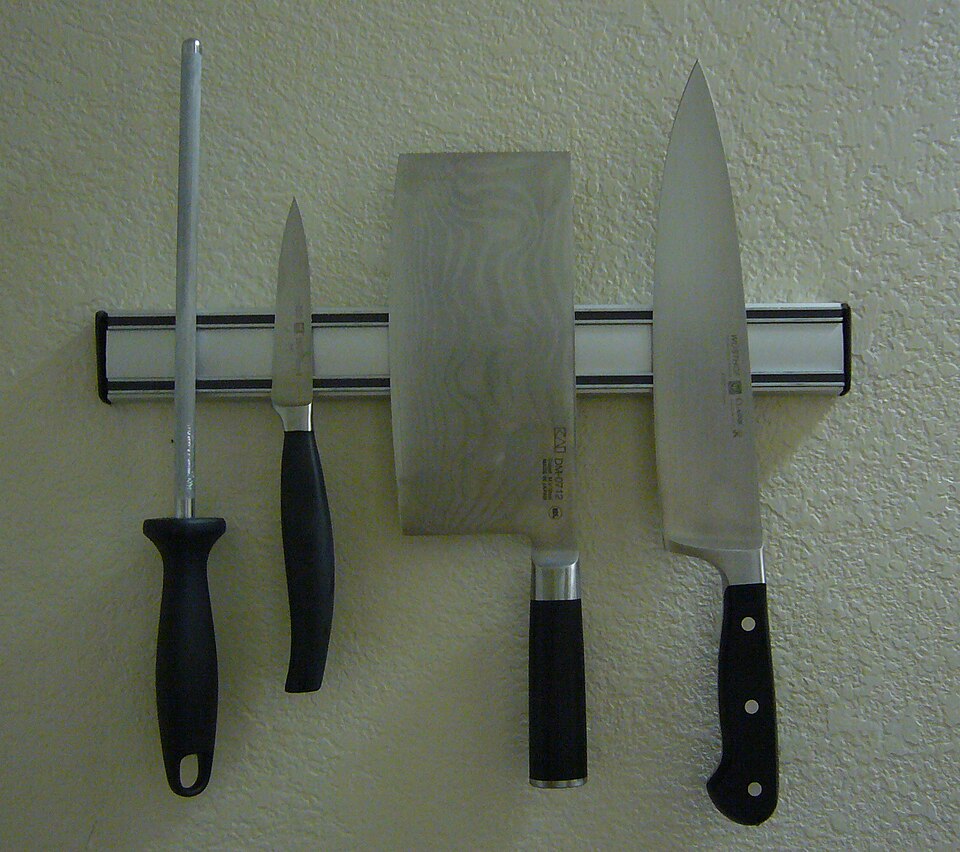
Tips
- Wood-faced magnetic strips are gentler on edges than bare metal.
- Place a strip or block away from the hob, where steam and heat can affect handles.
- Dry knives before storing, especially in a block, to stop rust and mould.
Choosing the knives themselves? See chef's knives and chopping boards. For other wall storage, see pot racks and utensil rails.
BeneRecipes may earn a commission from retailer links on this page, at no extra cost to you. Product suggestions are based on published specifications, not hands-on testing. How we work.