Kitchen design
Cooker Hoods: Ducted or Recirculating, and How Powerful?
How to size a cooker hood for your kitchen, the difference between ducted and recirculating, and how high to fit it.

A cooker hood removes steam, grease and smells before they settle on walls and cupboards. Choosing one comes down to three questions: where the air goes, how much air it moves and how wide it is.
Where to buy
Browse current options and prices at the retailer. These are affiliate links: we may earn a commission, at no cost to you (disclosure).
Ducted or recirculating?
| Type | How it works | Pros | Cons |
|---|---|---|---|
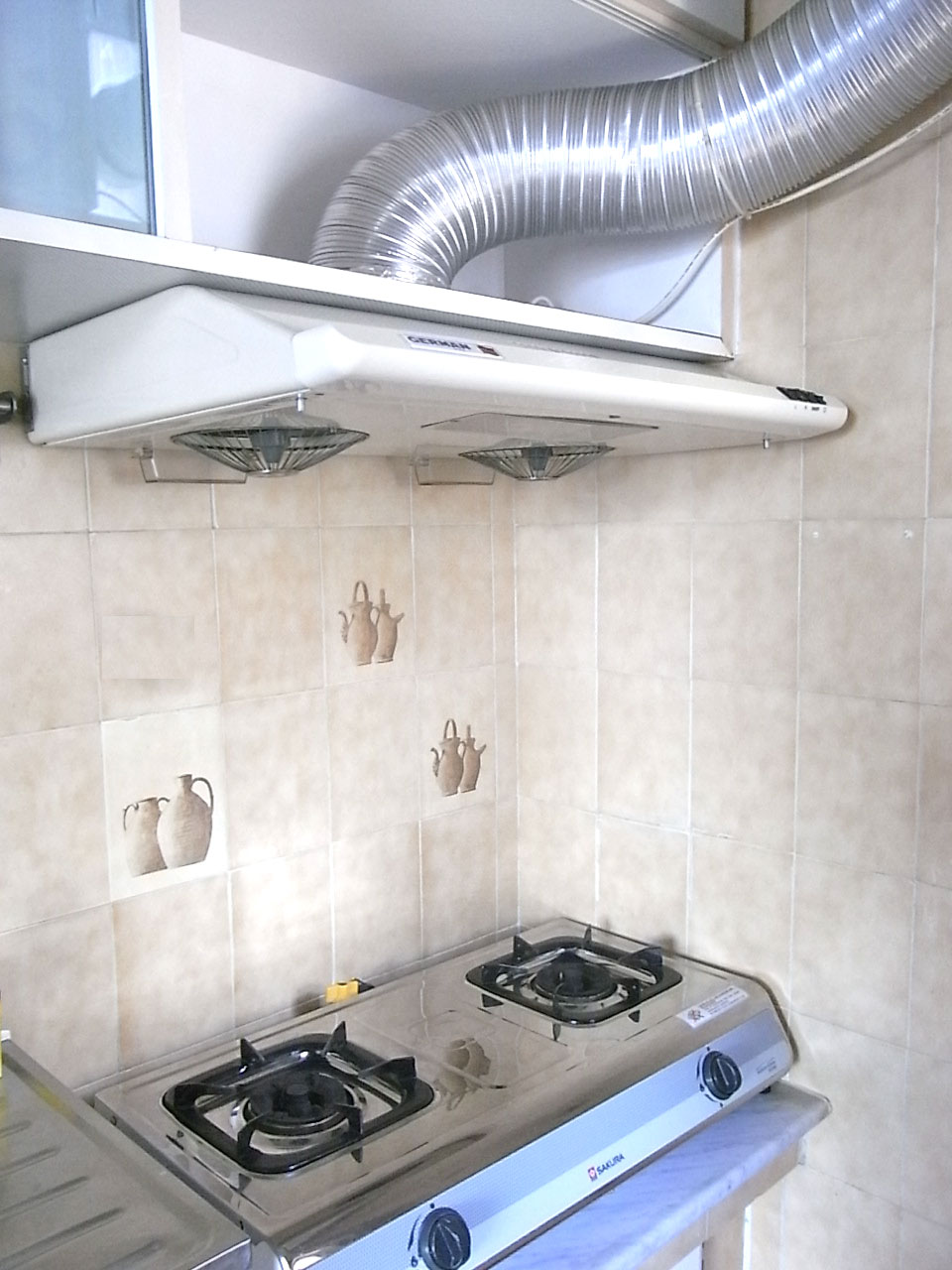
| Ducted (extraction) | Air goes outside through a duct | Removes steam and smells properly | Needs a route to an outside wall or roof |
| Recirculating | Air passes through grease and charcoal filters, then back into the room | Fits anywhere | Does not remove moisture; charcoal filters need replacing |
How powerful?
A common rule of thumb is that a hood should change the air in the kitchen about 10 times an hour:
room length × width × height (in metres) × 10 = extraction rate in m³/h
| Kitchen size | Room volume | Aim for |
|---|---|---|
| 3 × 3 m, 2.4 m ceiling | 21.6 m³ | about 220 m³/h |
| 4 × 3.5 m, 2.4 m ceiling | 33.6 m³ | about 340 m³/h |
| 6 × 4 m open-plan, 2.4 m ceiling | 57.6 m³ | about 580 m³/h |
The legal minimum in England: Approved Document F asks for at least 30 litres a second (108 m³/h) from a cooker hood that extracts outside, or 60 l/s (216 m³/h) where there is no hood or the hood only recirculates. A recirculating hood on its own does not count as ventilation. Look for the noise level in dB on the energy label as well: a hood you avoid using because it is loud does no good.
Size and height
- Width: at least as wide as the hob, ideally a little wider.
- Height above the hob: follow the hood maker's instructions; if none are given, Approved Document F suggests 650–750 mm for a ducted hood.
In an old fireplace
A range cooker set into a chimney breast often has a hood fitted inside the opening: see inglenooks and chimney breasts and our range cooker guide.
BeneRecipes may earn a commission from retailer links on this page, at no extra cost to you. Product suggestions are based on published specifications, not hands-on testing. How we work.
Frequently asked questions
Does a recirculating cooker hood meet Building Regulations?
Not on its own. Approved Document F says a recirculating hood does not provide compliant ventilation, so a kitchen with one needs a separate extract fan of at least 60 litres a second.
How high should a cooker hood be above the hob?
Follow the hood maker's instructions. If they give no figure, Approved Document F suggests 650–750 mm above the hob for a hood that extracts outside.
Is a bigger extraction rate always better?
Not always. Above what the room needs, a stronger motor mostly adds noise. Size the hood to the room and check the noise level in dB.
Sources
- Approved Document F: Ventilation, Volume 1 Dwellings (2021 edition), HM Government. Checked 1 October 2026.