Kitchen design
Ceiling Clothes Airers: The Pulley Airer Explained
How a traditional pulley airer works, where to put one, and how to fit it safely.
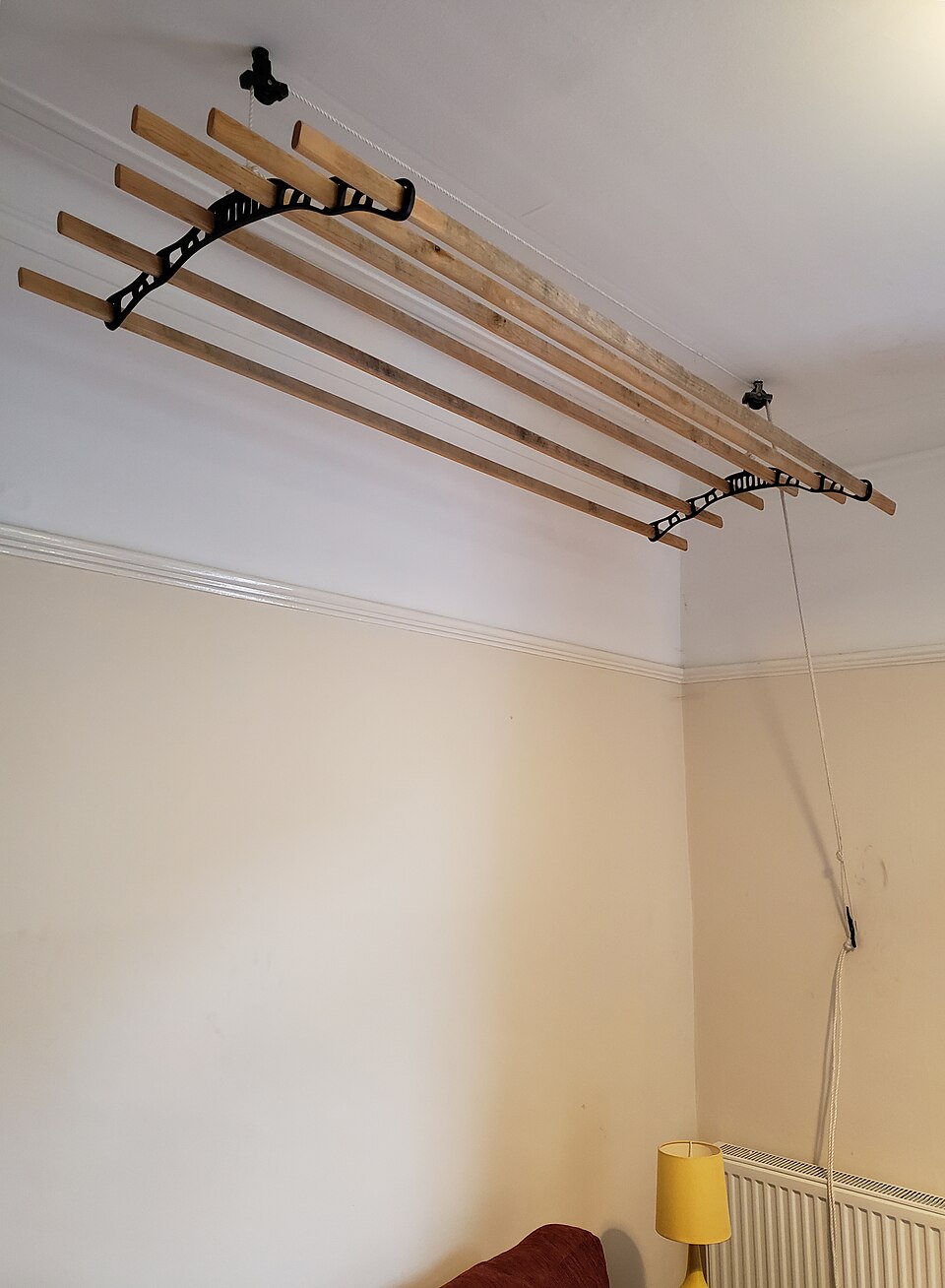
The pulley airer, a set of wooden rails raised to the ceiling on a rope and pulley, was a fixture of British kitchens, where the warmth of the range dried the washing. In Scotland it is often called a Sheila Maid. It is still one of the most efficient ways to dry clothes indoors without a tumble dryer.
Where to buy
Browse current options and prices at the retailer. These are affiliate links: we may earn a commission, at no cost to you (disclosure).
Why they work
Warm air rises, so the ceiling is the warmest, driest part of a room. Washing hung up there dries faster and is out of the way.
Where to put one
| Room | Notes |
|---|---|
| Kitchen | Warm, but keep it well away from the hob and cooking smells |
| Utility room | Ideal: out of sight, often near the washing machine |
| Stairwell or landing | High ceilings make the most of the drop |
Fitting it safely
- Fix into ceiling joists, not plasterboard alone: wet washing is heavy.
- Fit the cleat (the hook the rope ties off on) on a wall at a comfortable height.
- Check the ceiling height: the airer should hang clear of heads when raised.
- Ventilate: drying washing adds a lot of moisture. Open a window or run an extractor fan to avoid condensation and mould.
Rail length
Common lengths run from about 1.2 m to 2.4 m. Measure the space, allowing room for the pulleys at each end.
Hang your tea towels there too.
BeneRecipes may earn a commission from retailer links on this page, at no extra cost to you. Product suggestions are based on published specifications, not hands-on testing. How we work.